
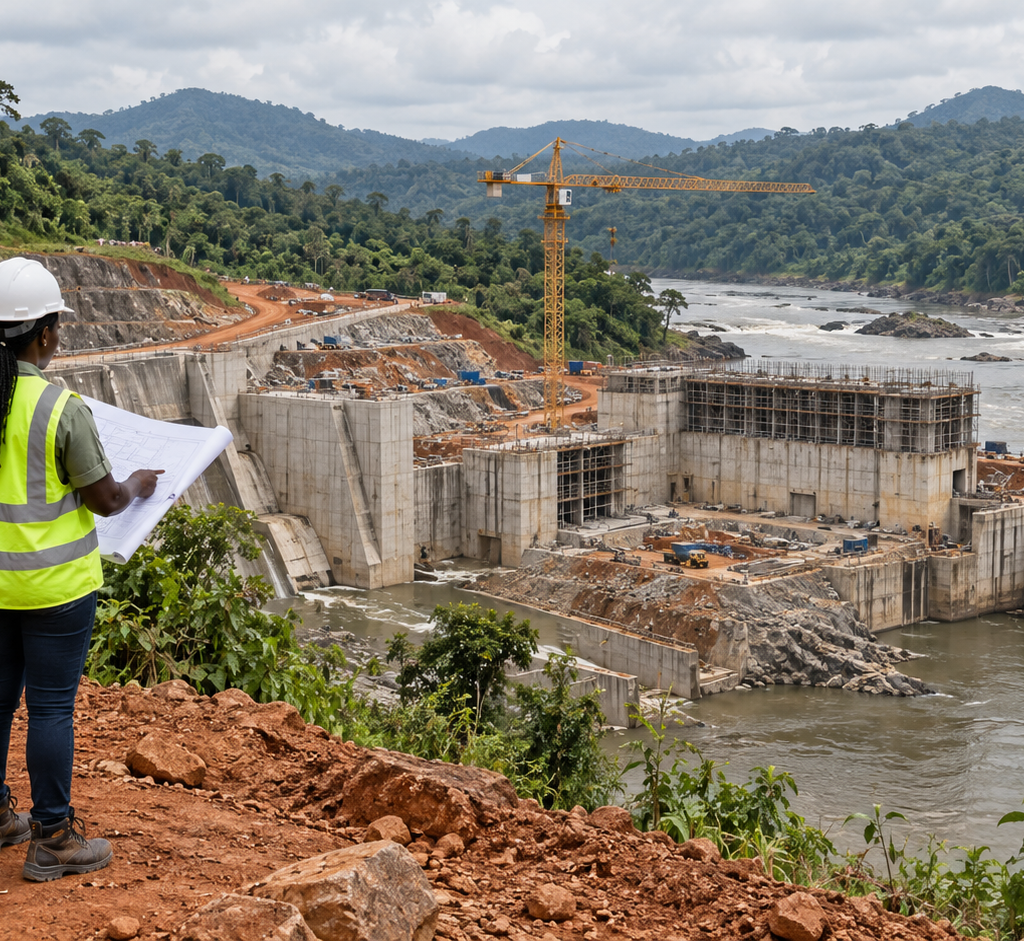
Power projects in Central Africa frequently fail to reach financial close because of ineffective risk allocation and weak mitigation mechanisms. For developers, investors and lenders, a recurring obstacle is determining who bears the financial consequences when a national utility cannot meet its payment obligations.
Off-taker creditworthiness is central to this challenge. A technically feasible project may still struggle to secure financing if its power purchase agreement (PPA) is backed by an undercapitalised utility without adequate payment security. Political, currency and termination risks further complicate the financing structure.
1. Why Off-Taker Creditworthiness Matters for Financial Close
Across Central Africa, the financial position of national utilities can undermine the bankability of energy infrastructure projects. When the electricity buyer has limited capacity to honour its commitments, an unsupported PPA may offer insufficient protection to investors and lenders.
Cameroon illustrates the pressure created by utility payment arrears. Following the exit of Actis, distributor Eneo was converted into state-owned SOCADEL on 4 May 2026. In 2025, Eneo owed transmission operator SONATREL approximately CFA 273 billion, equivalent to around US$450 million. Arrears at the Nachtigal hydropower plant reached CFA 70 billion, prompting independent power producers to reduce output until the state negotiated a CFA 100 billion bank facility.
The Democratic Republic of Congo faces similar off-taker challenges. State utility SNEL has low revenue collection and a heavy debt burden. The World Bank’s US$250 million Inga 3 Development Program therefore includes a focus on structuring SNEL into a credible off-taker.
Meanwhile, Mission 300 national compacts across the Democratic Republic of Congo, Chad, Cameroon and the Republic of Congo target electricity access rates ranging from 62% to 100% by 2030. Mobilising private investment to support these ambitions requires risk structures that financiers can accept.
2. The Main Risks Facing Central African Power Projects
Energy projects seeking substantial debt or equity from foreign financiers generally require risks to be allocated to the party best placed to manage them. The main categories include:
- Off-taker risk: the national utility’s ability to pay for electricity purchased from generation companies, particularly where it already carries significant debt.
- Political risk: government actions or events affecting the project, alongside the effectiveness of state support for the utility’s obligations under the concession agreement.
- Commercial risk: plant operation and delivery of electricity in accordance with the PPA.
- Construction and development risk: delays, cost overruns and technical challenges during implementation.
- Legal and regulatory risk: uncertainty or changes in laws, regulations and enforcement practices.
- Financial and market risk: interest-rate movements, exchange-rate fluctuations, inflation and refinancing difficulties.
- Social and environmental risk: community opposition, protests or broader social unrest that may disrupt project execution.
3. The Events That Can Prevent a Project from Reaching Financial Close
Risk allocation becomes particularly important when parties negotiate default, political-event and termination provisions. The source article identifies the following events and obligations as critical points for allocating responsibility between the utility, government and private party:
- Non-payment, insolvency or reorganisation of the off-taker.
- Failure to maintain required credit support or minimum escrow account balances.
- Unauthorised transfers of rights in breach of the PPA.
- Breaches of anti-corruption provisions.
- Nationalisation events.
- Changes in law or tax frameworks during the project.
- Currency inconvertibility.
- Prolonged political force majeure.
- PPA termination following an event of default.
- Failure by the utility or government to make a required termination payment.
- Unilateral termination by the government or private party.
The allocation of these risks determines who must respond when an adverse event occurs. Payment obligations, credit support and termination arrangements therefore need to form a coherent financing structure.
4. Aligning Project Structures with National Legal Frameworks
Project structuring must also account for the applicable national legal framework. Relevant instruments identified in the source article include Cameroon’s Law No. 2011/022 and Decree No. 2012/2806/PM, particularly Article 17, as well as the Republic of Congo’s Electricity Code, Law No. 14-2003.
These frameworks form part of the legal context within which concession agreements, PPAs and government support arrangements must be assessed. Contractual risk allocation and mitigation mechanisms need to be considered alongside the rules governing each national electricity market.
5. Five Priorities for Improving Project Bankability
The article identifies five measures to address recurring barriers to financial close:
- Publish standardised risk allocation matrices. Establish transparent rules for allocating risks under utility-scale PPAs.
- Ring-fence payment security. Implement sector-wide escrow or collections accounts managed by independent agents.
- Deploy portfolio and framework guarantees. Use multi-country guarantee facilities, including MIGA and IDA guarantee layers, to reduce transaction costs.
- Assess utility creditworthiness independently. Evaluate the off-taker’s balance sheet separately from the availability of sovereign guarantees.
- Move towards cost-reflective tariffs. Align electricity tariffs with the actual cost of supply to support long-term sector solvency.
6. What Developers, Investors and Governments Should Prioritise
Reaching financial close requires clarity on who carries off-taker, political, currency and termination risks. Developers and financiers need to assess the utility’s financial position, the payment security available and the support provided by government. Governments, in turn, need mitigation policies that make these commitments credible.
Standardised contractual arrangements, independent credit assessments and stronger payment security can help address the recurring weaknesses identified in Central Africa’s power sector.
Central Africa’s power projects need risk allocation that remains credible when payment difficulties arise. Progress towards financial close depends on assigning risks to the parties best placed to manage them and supporting those commitments with effective payment security, guarantees and sustainable sector revenues.
Sources and Further Reading
- “Why Central African Power Projects Die Before Financial Close: The Risk Nobody Wants to Own”, supplied source article.
- Cameroon: Law No. 2011/022 and Decree No. 2012/2806/PM, Article 17.
- Republic of Congo: Electricity Code, Law No. 14-2003.
- World Bank: Inga 3 Development Program.
- Mission 300 national energy compacts for the Democratic Republic of Congo, Chad, Cameroon and the Republic of Congo.
